
I’m sure we’ve all been there. We click over to a website to browse, shop, or watch a video and BAM –a full page in-your-face ad takes over the screen. For the most part, we click the X to close the ad and we move on with our lives. If we’re on a mobile device, this process may be a touch trickier and a little more annoying if that X is just out of reach. These are interstitial ads and they are pretty big right now.
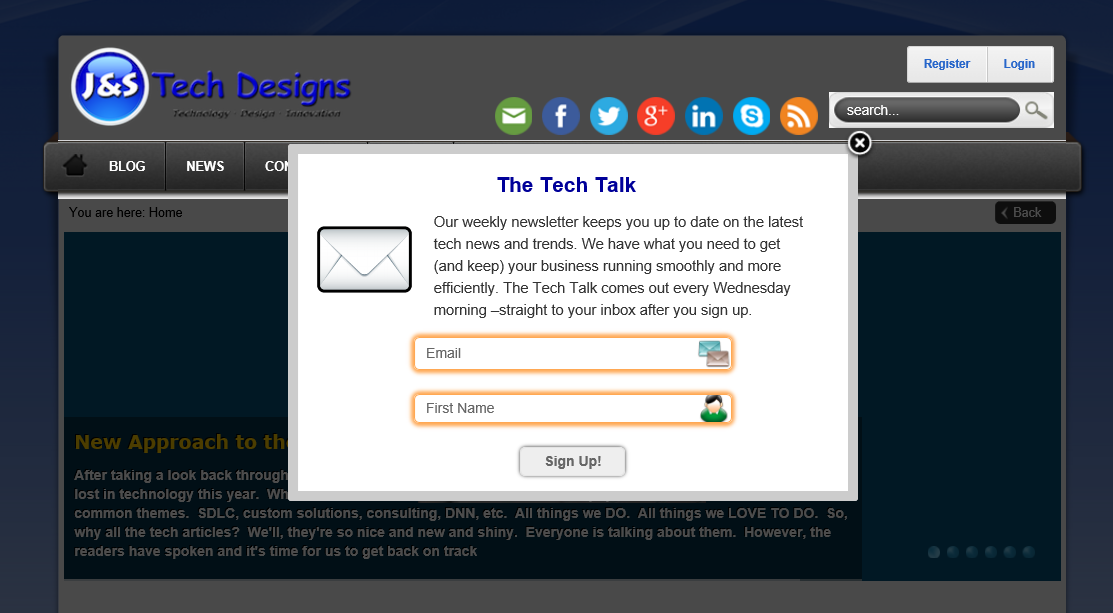
From a user experience perspective, they are hated. In some cases, the ad is designed to make it very difficult for the user to dismiss it to view the actual content of the page they were trying to get to. So, what are our thoughts on using interstitial ads to promote your content? Let’s first start out by pointing out that we ourselves have a (small) prestitial ad that pops up when you visit our homepage. This is an ad that displays before the homepage whereas an interstitial ad can pop up between any content pages. In our opinion, there is a time, place, reason, product, and platform for everything.
Sam Hurley, head of search at U.K. digital agency Midas Media, makes a pretty good point:
“Let’s face it: full-screen interruptive marketing is always going to foster negative feedback. However, the effectiveness of such advertising is to be reckoned with. Frustrating as these ads may be, the user has no option but to digest the information presented to them.”
In a nutshell? Yes, they are annoying; but, users are seeing and absorbing that information whether they’d like to or not. From a marketer’s and business owner’s perspective, I say use them. With caution. You don’t want to annoy your users into not returning. If you can choose a great, least disruptive, place to pop in an interstitial ad –go for it. However, if your customers are getting trapped in your ads or are visiting your site only to be launched into an interstitial ad between every page then you can probably guess that they’re not coming back.
Take our prestitial ad on our homepage for instance. This little box that pops up is to ask you to subscribe to our blog. The size of the ad is small enough that, if you’re looking at our homepage on a mobile device, you can easily see around the ad and close the ad at your convenience. I think that even though it’s important to put certain content in from of your readers, it’s equally important to try to avoid annoying your readers.
Another thought you should consider is letting your analytics speak for themselves. You can try an interstitial ad out and see what it does to your numbers. Is website traffic down? Or did it remain the same and now conversions are up? Let the numbers speak and try to follow their directions.
Who out there has used interstitial ads in their marketing? What were your results? As a user, what has your experience been with these types of ads? Comment below!