It’s been a little while since we’ve checked in with Google’s Project Loon. That doesn’t mean that their progress has slowed in the slightest. To recap, the goal of Project Loon is to provide internet access to parts of the world where it isn’t available by way of airborne balloons. They are definitely making huge strides towards just that.
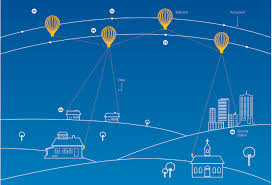
Currently, a single Loon balloon can remain afloat for more than six months! This same balloon can provide 4G LTE wireless service to an area that size of Rhode Island.
From TechSpot:
Instead of offering a standalone Internet service, Loon balloons are being designed to gather signals from traditional land-based cellular towers. Balloons can operate in a daisy-chain configuration meaning a signal from a distant tower can jump from balloon to balloon to reach far away regions […]In the small-scale beta testing thus far, Google says Loon balloons are able to provide LTE with download speeds of about 10Mbps.
Google has patented a few different methods to control the altitude of the balloons.
Patented Methods:
Gas in the envelope is pumped out into a high-pressure storage chamber to decrease altitude. Gas is moved into the envelope to increase the altitude.
Balloons run a fuel cell in reverse to generate hydrogen gas. The hydrogen gas is moved into the envelope to increase buoyancy and altitude. The hydrogen is pumped back to produce power via the chemical reaction of hydrogen and oxygen together to produce water.
A portion of the Balloon envelope is painted black. The balloon is rotated so that the black portion faces the sun, to increase altitude. Because black absorbs heat, it warms up the gas inside the envelope.
Project Loon is making great headway. We are seeing great improvements and a glimpse of what the future could be. There are always a few hiccups along the way though. A few days ago one of Google Loon’s balloons crashed in a mountain township in Central Mexico. It caused quite a buzz. Because reports couldn’t confirm if it was a plane crash, skydiver falling to the earth, aliens attacking, etc. –they sent soldiers, state police, and civil defense workers in.
No one was hurt, just a little surprised.
We have high hopes for the Loon balloons and we think they’re going a long way. Anyone else keeping up with their progress or tracking any other internet methods? Feel free to share any news you have below.
For past articles on Google Loon, click here.